
Skip to content

Same-day serviceFinancing available

Houston, TX (713) 555-0183
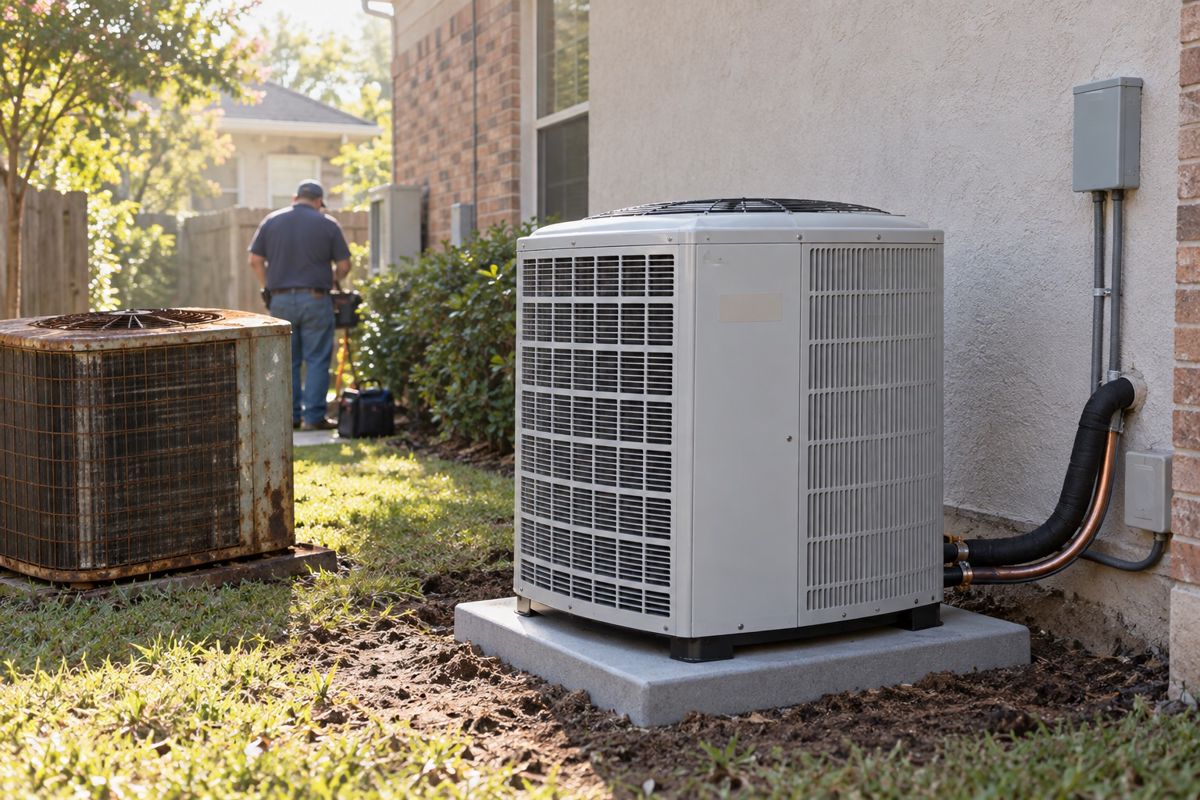
New outdoor AC unit set on a pad next to an old unit

AC replacement in Houston, TX

AC replacement in Houston, sized for your home

A new central air conditioner should fit your house, your ducts, and your humidity problem. We explain the options and quote in writing.

  • Sizing based on the house, not a guess
  • SEER2 and refrigerant explained plainly
  • Written quote with equipment listed

Step 1 of 3

What do you need?

When is AC replacement in Houston worth it?

A search for AC replacement Houston usually starts after a repair bill that hurts. Replacement is a big spend, so the goal is to decide with facts instead of pressure. These signs point toward replacing rather than repairing again:

  • The system is old and the compressor or coil has failed.
  • It uses R-22, a refrigerant that has been phased out of new production, so service is harder and costlier.
  • You have had several repairs in a short stretch.
  • Cooling bills keep climbing while comfort drops.
  • The house stays sticky even when the thermostat is satisfied.
  • The unit runs nonstop on hot afternoons and rooms are still uneven.

Our climate means a system runs for many months a year, so wear adds up quickly. If the unit is fairly young and the fault is contained, an AC repair may be the smarter move. We will tell you which way the numbers lean, even when the answer is a smaller job.

How should a new system be sized and chosen?

Bigger is not better in Houston. An oversized unit cools the air fast, shuts off, and leaves moisture behind. You get a cold, clammy house and short cycles that wear parts.

Start with a load calculation

A proper sizing method looks at the house: floor area, windows, insulation, attic conditions, duct layout, and how the house faces the sun. Ask any contractor to explain how they sized the system. Copying the tonnage of the old unit is not a calculation, especially if the house has had insulation or window upgrades.

Look at the ducts, not only the equipment

Many Houston homes have ducts running through a hot attic. Leaky or crushed ducts can waste a large share of the cooling you pay for, and a new outdoor unit will not fix that. We check duct condition, returns, and airflow, and tell you what should be sealed or replaced.

Single-stage, two-stage, or variable speed

Variable-speed systems run longer at lower output, which helps with humidity and comfort. They cost more up front. Whether the extra cost pays back depends on your house, how you live, and the price of power. We lay out the choices and you decide.

What do SEER2 and refrigerant rules mean for a new system?

SEER2 is the current efficiency rating for new central air conditioners in the United States. It replaced the older SEER testing method in 2023. The federal minimum depends on the region, and Texas sits in the southern region, which has a higher minimum than northern states. Rules and sell-through dates have changed more than once, so ask your contractor to confirm what applies to the exact equipment being installed.

Refrigerant is also in transition. Older systems use R-22 or R-410A. Under federal rules, new residential equipment is moving to lower-impact refrigerants such as R-454B and R-32, and the details depend on the date and the model. For you, that means equipment choices may differ from what a neighbor bought a few years ago, and service parts and refrigerant for older systems can become harder to find. We will tell you which refrigerant a proposed system uses and why.

Higher efficiency can lower summer bills, and Houston's long cooling season gives it more time to pay back. Still, correct sizing, tight ducts, and good humidity control usually matter more than chasing the highest rating on the box. Rebates and tax credits come and go, so check the program itself at the time you buy.

We do not post prices because no two houses are alike. These are the main factors:

  • System size and type: single-stage, two-stage, or variable speed.
  • Efficiency rating and refrigerant type.
  • Whether the indoor coil and air handler are replaced along with the outdoor unit. A mismatched coil can hurt performance.
  • Duct repairs, new returns, or new supply runs.
  • Attic access, wall or roof access, and how far the line set must run.
  • Electrical work such as a new disconnect or breaker.
  • Permit fees and local inspection requirements.
  • Extras like a surge protector, a new pad, a drain safety switch, or a smart thermostat.

Ask every contractor for a written quote that lists the equipment model numbers, what is included, and what is not. Comparing quotes line by line shows where the real differences are.

How long does replacement take, and what about permits and floods?

Many replacements are done in a day or two, but duct work, electrical upgrades, or moving the equipment can add time. We confirm the plan after we see the house.

A typical replacement day

  1. The crew protects floors and sets up in the attic or closet.
  2. The old system is shut down, refrigerant is recovered rather than vented, and the old equipment comes out.
  3. New equipment is set, the line set and drain are connected, and the electrical is finished.
  4. The system is leak checked, evacuated, charged, and started.
  5. You get a walkthrough of the thermostat, filter, and basic care.

Permits

Many cities and counties in the Houston area require a mechanical permit for a replacement. Ask who pulls it and whether an inspection is scheduled. A contractor who skips the permit leaves the risk with you.

Flood-prone areas

If your street has flooded before, ask about raising the outdoor unit on a stand above the expected water level, and check local floodplain rules. In hurricane season, the unit should be anchored. For rooms the ducts serve poorly, a ductless mini-split may fit better than extending old ducts. See our home page for all services.

  • Same-day service
  • Financing available
  • Clear communication
  • Upfront pricing

How it works

1

Book a visit

Call or request a time online.

2

Diagnosis and quote

A technician finds the problem and quotes the fix.

3

Repaired or replaced

Most repairs finished the same day.

Request central ac replacement

Tell us what you need and we call you back.

No obligation.

Step 1 of 3

What do you need?

Questions about hvac in Houston

How long does a central AC system last in Houston?

Many systems last roughly ten to fifteen years, and heavy use in a humid climate can shorten that. Maintenance, drain care, coil cleaning, and installation quality all matter. Age alone does not decide it. A clean, well-installed system can outlast a neglected one. We look at condition, repair history, and refrigerant before suggesting replacement.

Do I have to replace the indoor unit along with the outdoor unit?

Often yes, or at least the indoor coil. Manufacturers rate systems as matched sets, and a mismatched coil can lower efficiency and cause problems. With the newer refrigerants, matching matters even more. We check what you have, explain what must be replaced, and quote it as a clear line item so you know why.

Can I keep my existing ductwork?

Sometimes. Ducts need to be sealed, insulated, and sized for the new equipment. In many Houston attics, ducts leak or are crushed over time. We inspect the system and tell you what can stay and what should be repaired or replaced. Keeping poor ducts can cost you comfort and electricity with any new unit.

Do I need a permit to replace my air conditioner?

Many cities and counties around Houston require a mechanical permit for equipment replacement, but rules differ by location. Ask your contractor who pulls it, what it costs, and whether an inspection is scheduled. If a contractor says permits are not needed, ask them to confirm with your local building department.

Is a higher SEER2 rating always worth it in Houston?

Not always. Our long cooling season gives efficient equipment more time to pay back, but sizing, duct quality, and humidity control often matter more than the number on the label. Compare the price difference against what you may save, and consider how long you plan to stay in the house.

Should I raise the outdoor unit if my area floods?

If your property has flooded or sits in a flood-prone area, raising the outdoor unit on a stand or platform is worth discussing. The right height depends on local flood data and rules, so check with your city or county floodplain office. The stand should be sturdy and the unit anchored for storms.

Ready when you are

Call now or request a quote online.

(713) 555-0183
Get a free estimate