
Skip to content

Same-day serviceFinancing available

Houston, TX (713) 555-0183
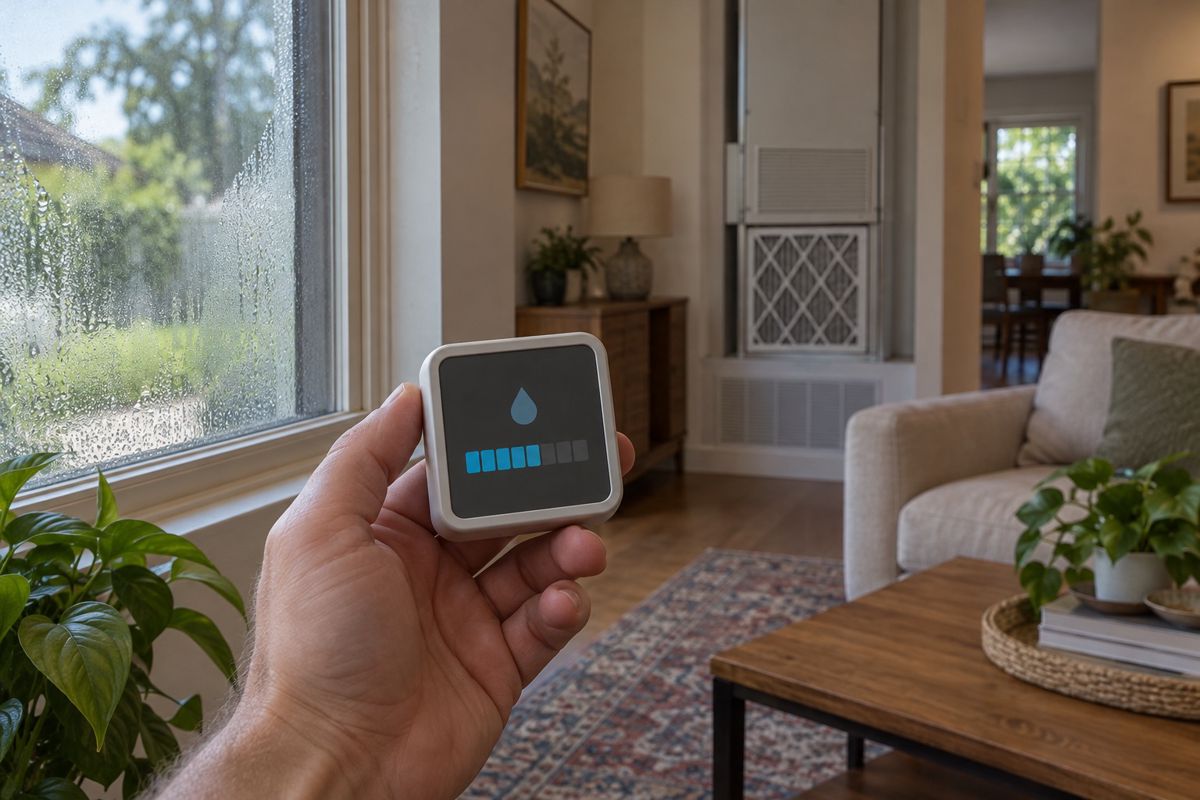
Hand holding a humidity meter in a humid Houston living room

Air quality in Houston, TX

Indoor air quality in Houston starts with humidity

A sticky, musty, or dusty home is often a humidity and airflow problem. We look at the cause before suggesting any equipment.

  • Humidity checked before gadgets are sold
  • Filter and airflow options explained
  • Written quote before work begins

Step 1 of 3

What do you need?

Why does indoor air quality matter in a Houston home?

Houston's air is humid for much of the year, and that moisture follows you indoors. When a house stays damp, mold and dust mites have an easier time, windows may sweat, and everything feels sticky. Air quality here is rarely just about dust. Moisture is usually the first thing to look at.

Other issues show up too. Leaky ducts in a hot attic can pull attic air, with dust and insulation fibers, into the house. Pollen and mold spores come in on shoes and open doors. A tight, newer home can hold on to stale air, while an older home with gaps may let in more outdoor humidity.

Anyone searching for indoor air quality Houston help should start with a plain question: is the house too damp, too dusty, or too stale? The answer decides what, if anything, to add.

What is the right indoor humidity, and how do you control it?

Many sources, including the EPA, suggest keeping indoor humidity roughly between 30 and 50 percent. Mold risk climbs when it stays above about 60 percent for long periods. A cheap hygrometer will tell you where your house sits.

If readings run high, these are the usual causes and fixes:

  • An oversized air conditioner. It cools fast, shuts off, and does not run long enough to remove moisture. Correct sizing helps.
  • Fan set to on. Water on the coil can blow back into the house between cycles. Auto is often better for humidity.
  • Leaky ducts and return paths. They pull in humid attic air.
  • Clogged coils or drains. They reduce moisture removal.
  • Showers and cooking without venting. Bath and kitchen fans should vent outside.

When these fixes are not enough, a whole-home dehumidifier tied into the ducts can handle the rest.

Do filters, purifiers, and UV lights help?

Some do, and some are oversold. Here is the plain version.

Filters

A better filter catches more dust, but a dense filter can choke airflow and strain the system. A media filter cabinet gives more surface area and usually works better than forcing a thick filter into a small slot. Change filters on schedule.

Air purifiers and UV lights

Portable purifiers can help in a bedroom. UV lights near the coil are sold to limit growth on the coil and drain pan, though results vary and they do not fix humidity. We explain what each option can and cannot do, and we will tell you when a product is not worth buying for your situation.

Ventilation

Some homes benefit from controlled fresh air. In Houston that air brings humidity, so it must be handled carefully. This is a design question, not a quick add-on.

Costs vary widely, so we do not post numbers. These things decide the total:

  • The type of equipment: filter cabinet, whole-home dehumidifier, UV light, or ventilation unit.
  • Whether duct sealing or repair is needed first. It often delivers the biggest result.
  • Attic or closet space available for new equipment.
  • Electrical and drain connections.
  • Whether the air conditioner is sized correctly and in good shape.
  • Ongoing costs such as filters, bulbs, and power use.

Fixing the cause is usually cheaper than adding equipment on top of a problem. We start with testing and a clear plan, then give you a written quote that lists what is included.

What should you expect, and when should you call?

A visit usually starts with questions about what you notice: musty smells, sweating windows, allergies, dust, or rooms that feel damp. We check humidity, filters, ducts, and the cooling equipment, and we explain what we find. Time on site depends on the home and what is being installed, and we confirm that when we see the house.

Call when humidity stays high, when you smell must near vents, or after a flood or leak when ducts may have been affected. We are not doctors, and we do not do mold remediation. If you have health symptoms, talk to a medical professional, and if you see widespread mold, a separate specialist may be needed.

Your cooling system matters here, so if it is struggling, AC repair may come first. For uneven rooms, see zoning and thermostats, or go back to our home page.

What you can expect

  • Same-day service

  • Financing available

  • Clear communication

  • Upfront pricing

How it works

  1. Book a visit

    Call or request a time online.

  2. Diagnosis and quote

    A technician finds the problem and quotes the fix.

  3. Repaired or replaced

    Most repairs finished the same day.

Request air quality

Tell us what you need and we call you back.

No obligation.

Step 1 of 3

What do you need?

Questions about hvac in Houston

What is a healthy indoor humidity level in Houston?

Many guidelines, including the EPA's, suggest keeping indoor humidity roughly between 30 and 50 percent. In Houston, staying in that range takes steady work. Use a hygrometer to check your own readings. If numbers stay high for long periods, look at sizing, drains, ducts, and a dehumidifier.

Why does my house smell musty when the AC is running?

A musty smell often points to moisture on the coil, a slow drain, damp insulation, or leaky ducts. It can also mean a part of the house is staying too humid. Do not just mask it. Have the coil, drain pan, and ducts checked, and get humidity readings before buying equipment.

Will a higher-rated air filter fix my air quality?

Not by itself. A denser filter catches more particles but can restrict airflow if the system was not built for it. Check what your equipment can handle. A media cabinet can allow better filtering with less restriction. Filters help with dust, but they do nothing for humidity.

Do UV lights and air purifiers work?

Results vary. UV lights near the coil are meant to limit growth on the coil, and portable purifiers can help in one room. Neither replaces fixing moisture, filters, and ducts. We tell you whether a product makes sense for your home before you spend money on it.

Can leaky ducts affect indoor air quality?

Yes. Ducts in a hot attic can pull in attic air and dust through gaps, and they can bring humid air into the system. Sealing and repairing ducts often improves comfort, humidity, and cleanliness together. It is one of the first things worth checking.

Do you handle mold removal?

No, we focus on the air conditioning side: humidity, filtration, drains, and ducts. If you see widespread mold, a licensed mold specialist should assess it. We can help prevent a return by fixing the moisture source in the cooling system, and we will tell you if we see something outside our work.

Ready when you are

Call now or request a quote online.

(713) 555-0183
Get a free estimate