
Skip to content

Same-day serviceFinancing available

Houston, TX (713) 555-0183
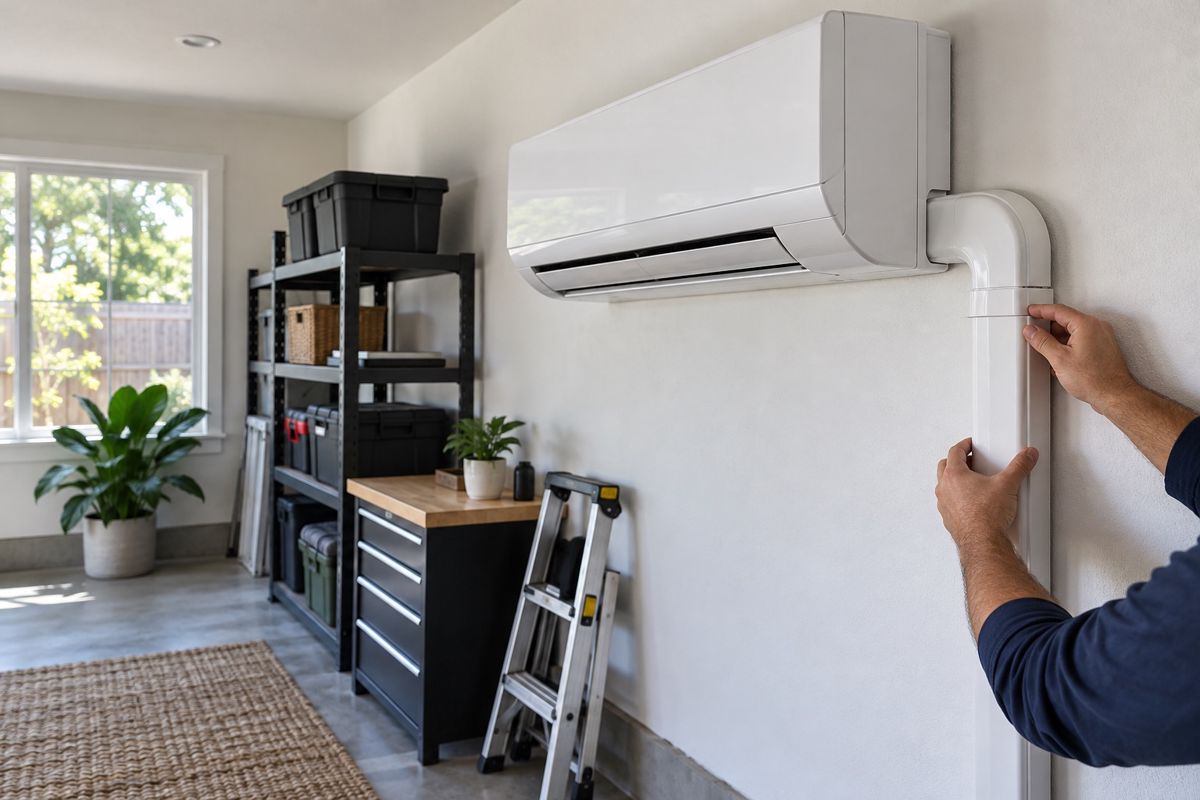
Wall-mounted ductless mini-split unit in a converted garage room

Mini-splits in Houston, TX

Mini split installation in Houston for rooms ducts miss

A ductless system cools one room or several without new ductwork. We explain what fits your space, your wall, and your budget.

  • Single-room and multi-room options
  • No new ductwork needed
  • Written quote before work begins

What is a ductless mini-split, and where does it work in Houston?

A mini-split has an outdoor unit and one or more indoor units joined by a small line set. There is no ductwork, so the indoor unit hangs on a wall, sits in the ceiling, or mounts as a slim cassette. Each indoor unit has its own thermostat, which makes it a good tool for spaces the main system handles badly.

People ask for mini split installation Houston homes can use in a few common places:

  • Garage conversions and game rooms.
  • Room additions and sunrooms.
  • Bonus rooms over the garage that never get cool enough.
  • Older bungalows with pier and beam floors and no attic ducts.
  • Home offices, workshops, and studios.

It is not always the right answer for the whole house. For a room that just needs a boost, a mini-split can be a better fit than reworking old ducts.

How do mini-splits handle Houston humidity?

Modern mini-splits use inverter compressors that vary their output instead of switching fully on and off. That steady running can pull moisture out of the air more evenly than a unit that cycles hard. Many also have a dry mode.

There are limits. A mini-split sized too large will cool the room quickly and still leave it clammy, which is the same trouble as an oversized central system. Sizing must account for the actual room: windows, insulation, sun exposure, and what the space is used for. A garage or sunroom with lots of glass needs a different calculation than a bedroom.

A mini-split is not a whole-home dehumidifier either. If the whole house stays sticky, look at humidity control and air quality. We tell you honestly when a ductless unit will solve the problem and when it will not.

What does mini split installation involve?

The work is more involved than a window unit and simpler than new ducts. A typical install includes:

  1. Choosing a spot for the indoor head that gives even airflow and keeps clear of furniture.
  2. Drilling a small hole through the wall for the line set, drain, and wiring.
  3. Setting the outdoor unit on a pad or wall bracket, with room for airflow.
  4. Running electrical power with a disconnect, and sometimes adding a breaker.
  5. Evacuating and checking the lines, then starting the system.
  6. Showing you the remote, the filter, and basic care.

In flood-prone neighborhoods, ask about mounting the outdoor unit higher than the expected water level. In hurricane season, the unit should be anchored. Brick, siding, and stucco walls each need slightly different methods, and we plan for that before the day.

We do not list prices because jobs vary a lot. These factors matter most:

  • How many indoor units you want, and the size of each.
  • The efficiency and features of the equipment.
  • The length and route of the line set, and how hard it is to hide.
  • Wall type and access to the outdoor location.
  • Whether the electrical panel has room for a new breaker or needs work.
  • A condensate pump if gravity drainage is not possible.
  • Permit and inspection requirements in your city or county.

Multi-zone systems share one outdoor unit and serve several rooms, while separate single-zone systems give each room its own outdoor unit. Each has pros and cons, and we walk through them. Ask for a written quote that lists each indoor unit and what is included.

How long does installation take, and when should you call?

A single-room install is often a one-day job, while multi-zone installs can take longer. We confirm the plan after seeing the space, because wall type, power, and access change the schedule.

Call when a room is always too hot, when you are finishing a garage or addition, or when a home has no ducts and you want cooling that does not rely on window units. If the main system is old and failing, central AC replacement may need to be part of the conversation. If the issue is uneven temperatures across the house, zoning and thermostat work may be cheaper than adding a separate system.

Visit our home page to see everything we do, or call (713) 555-0183 to describe the room.

  • Same-day service
  • Financing available
  • Clear communication
  • Upfront pricing

How it works

1

Book a visit

Call or request a time online.

2

Diagnosis and quote

A technician finds the problem and quotes the fix.

3

Repaired or replaced

Most repairs finished the same day.

Request ductless mini-splits

Tell us what you need and we call you back.

No obligation.

Step 1 of 3

What do you need?

Questions about hvac in Houston

Can a mini-split cool a garage conversion in Houston?

Yes, if it is sized for the real conditions. A garage often has less insulation, big doors, and a hot slab, so the load is higher than the floor area suggests. Improving insulation and sealing air leaks before sizing the unit can help the system work better and keep humidity down.

Do mini-splits work for the whole house?

They can, using several indoor units, but costs rise with each zone. Many homeowners use them for one or two problem rooms and keep the central system for the rest. If the central system is failing or has poor ducts, a full ductless setup can be worth comparing. We help you weigh both.

Will a mini-split help with humidity?

It can help in the room it serves, especially if it is sized well and runs steadily. It will not control humidity in the rest of the house. For whole-home moisture problems, a dehumidifier or a properly sized central system may be needed, along with fixing leaks and sealing ducts.

Do I need a permit to install a mini-split?

Often yes, since a new system involves electrical and mechanical work. Rules differ by city and county. Ask your contractor who handles the permit and whether an inspection is required. Skipping it can cause problems with insurance or when you sell the home.

How should the outdoor unit be protected in a hurricane area?

It should sit on a level, sturdy pad or bracket and be anchored so it does not shift in high wind. In flood-prone spots, raising it on a stand can help. General practice also includes keeping loose items away from it and shutting it off if a storm is coming.

Ready when you are

Call now or request a quote online.

(713) 555-0183
Get a free estimate